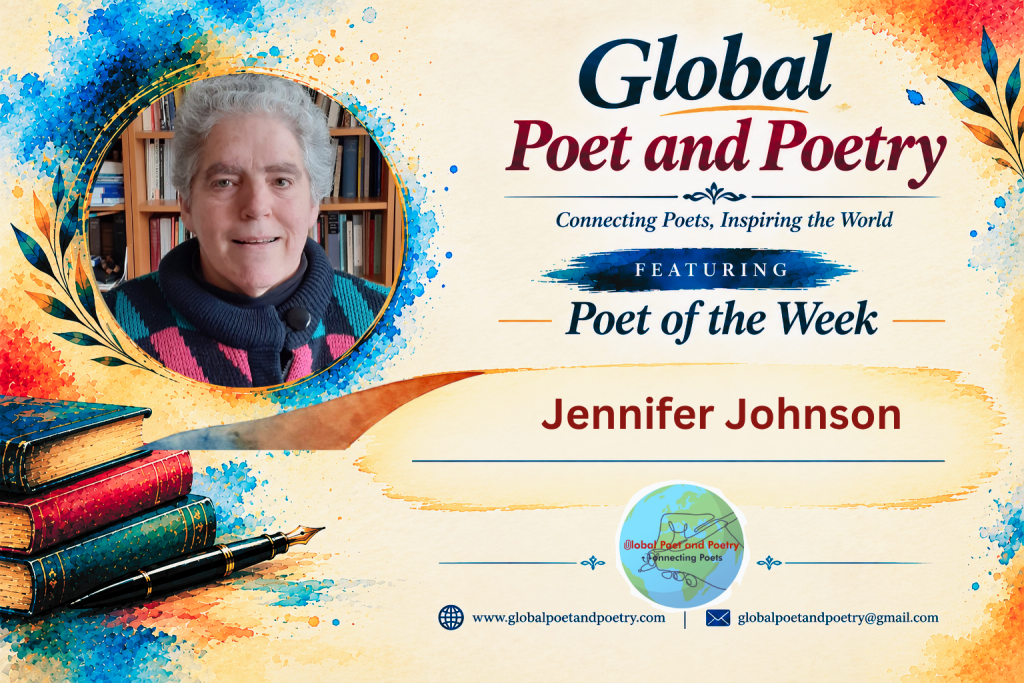
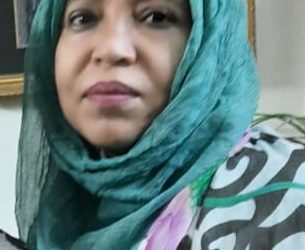
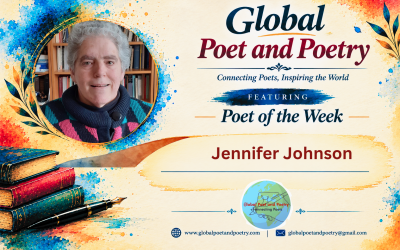
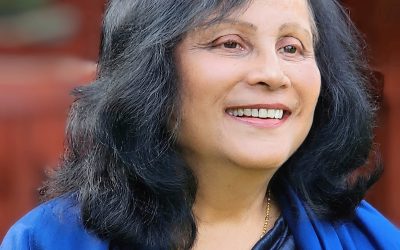
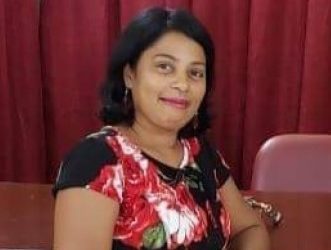
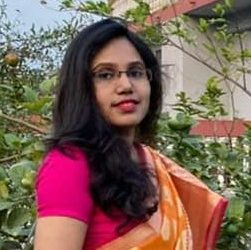
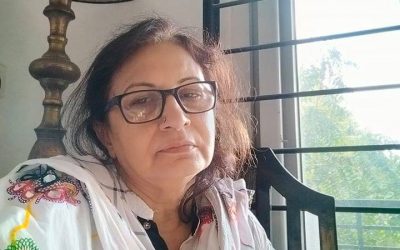
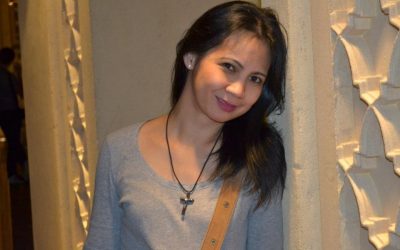
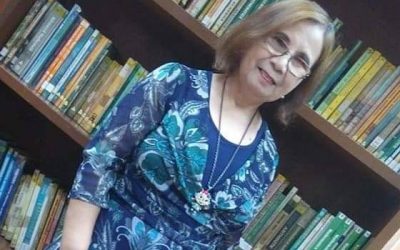
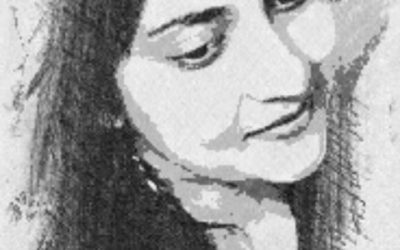
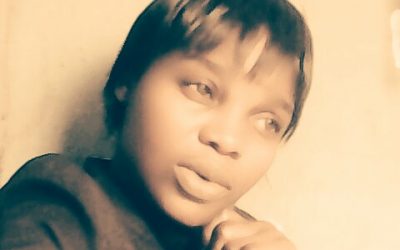
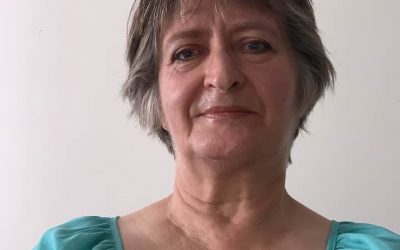
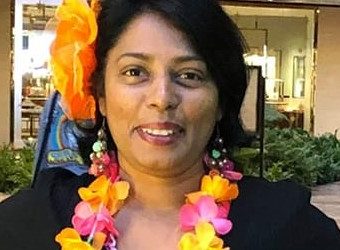
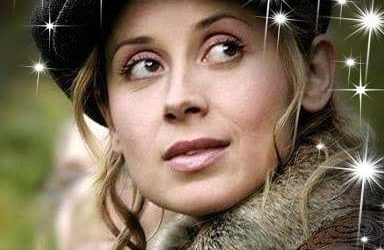
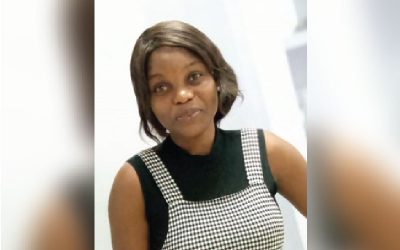
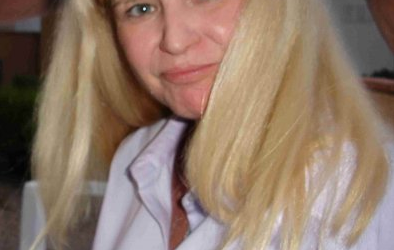
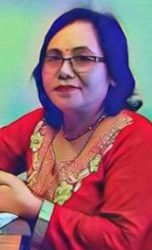
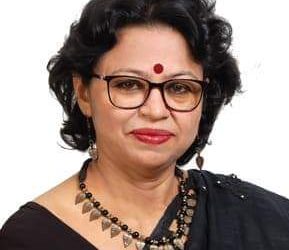
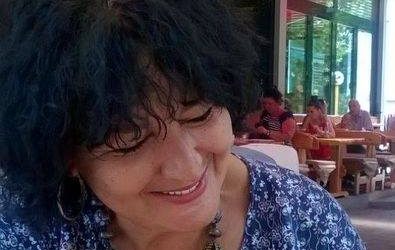
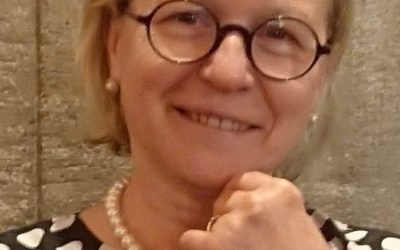
Jennifer Johnson was born in Sudan in 1956 and spent part of her childhood in Ghana, experiences that may have helped shape her awareness of different cultures, identities, and perspectives. Her poetry has been widely published in literary magazines and anthologies, establishing her presence in contemporary poetry. Her collections include Footprints on Africa and Beyond, published by Hearing Eye, and Hints and Shadows, published by Nettle Press.
Johnson’s writing reflects an interest in human experience, personal reflection, and the complexities of existence. Her work invites readers to explore themes of identity, change, memory, and the uncertainties of life. In 2022, she won a Bread and Roses award, recognising her literary achievement. She also contributes reviews to London Grip online magazine, where her engagement with contemporary literature extends beyond her own creative work.
Through her poetry and literary criticism, Jennifer Johnson continues to contribute to the richness of the literary landscape. Her published collections, award-winning work, and involvement in literary journals demonstrate her commitment to poetry and the wider literary community.
A collection of poetry by Jennifer Johnson
Uncomfortable Times
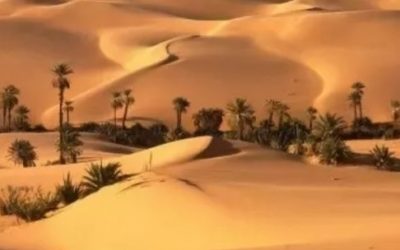
As I was being born in a hundred and twenty degrees on a boat making for Khartoum, a spaceship was circling the Earth in icy outer space. When adults drank tea, I drifted off, imagined cups and saucers floating like early astronauts who had to live without the certainty of gravity. It’s hailing on the Sudanese border – the closest I’ll get to my birthplace. For the first time in a decade a storm stings tourists in a boat with no umbrellas for shelter. I want to be a spacewoman, pass beyond troubled weather but acceleration sickness burns up my protection from forgotten secrets that now splurge out in fading ink.
Back to my own country
We fled to England, my father’s country, when I was four. My mother carried me as soldiers were shooting all round us. On the plane she gave me my doll and a comb to untangle its hair. I shook with her terror. I asked questions. No answers, just my father’s hands stuck above his head, still trying to surrender. After landing, we shivered in the rain, kept thinking it was about to get dark but both clock hands reached for the sky. That winter I caught my parents’ confusion when they forced me to stumble in huge Wellingtons. Pushed by older children who said they hated foreigners I fell on every icy patch.
Time Unearthed
A week before my birth my mother found a watch unearthed by some passing lorry. Born in the Sudan, a place I can’t remember except for the house dark inside, surrounded by the veranda full of rabbits I never wanted to leave and a Cornflakes box a friend brought from England, a place I’d never seen but was going to spend sunless years learning to pretend I was familiar with milk bottles and Weetabix, that I was born there. An old photograph shows a tiny woman – her child’s hair wild as the shifting sands that came to bury our home. Years later, my dying mother in Birmingham was still wearing that watch, still ticking away as she swallowed her last painkillers.
Groundnut Chop
I remember groundnut chop in sunny, sixties Ghana reminding me of when I played with shanty kids climbing trees, spinning around to ‘I’m so dizzy’. I remember trips to Winneba where surf tumbled me over, the only access to that beach on narrow roads between lagoons where drowned cars rusted. I remember my sandy school, studying geography with Kofi, Mrs Bapat draping a snake between her tiny arms, an eclipse that cooled the morning. I remember biting into a roll full of ants, screaming at my mother’s orange dress, obeying her shout to ‘run’ when the earthquake shook. I remember being bitten by next door’s Alsatian, my parents rushing me to the military hospital for rabies jabs and iodine. I remember a road block where soldiers told my father to open the boot. They jumped when they saw something wrapped in paper, a paw-paw. I remember when it all ended, a morning woken by gunfire. After the silence, a general shouted on the radio for hours. My school was closed. The holes in the buildings sent us back to England where no-one wanted to hear about Ghana. Groundnut chop gave way to news-wrapped fish and chips.
Whose weather?
In the early sixties I went to scho in Ghana. I remember the teacher giving out geography textbooks that had come all the way from England. Their covers were made of a yellow weave that somehow always looked dirty. Each page was dense with droning prose. There were no pictures to break up the pages of heavy, uninviting print. Ignore the section about the weather the teacher said, that’s for people in England. One girl, curious about the country she dreamed of living in one day, decided to read that section anyway. Is snow what you have in the fridge? she asked. I told her it was the same. No-one could live somewhere that cold. They would die! I tried to tell her about the thick coats people wore but she continued not to believe me. The following year we had new books, brightly coloured books made in Ghana with Kofi explaining Ghanaian weather, its brilliant sunshine and thundery downpours, weather that somehow fitted that country’s youthful vitality. Everyone was so happy. They’d finally escaped their drizzly ex-colonists. Of course, it didn’t turn out to be so easy and, in a few years, I had to leave when a violent coup ousted Nkrumah and sixteen hundred died. For a short while before, though, life was full of bright pictures, brilliant weather.
Passages
In this coastal town poverty protects itself with flags and dogs. Visitors climb to the fort that guarded against strangers for millennia, look down on ferries that feed this port. Underneath the castle is chalk of the same sort teachers taught and frightened me with. It is worm-eaten, though, with defensive passages carved out in countless wars. These chalk tunnels dig into my memory, my childhood obscured by Sudanese sandstorms. A plane simply flew my family into clearer weather, first to Malta, then London. Are those head-scarfed women sitting on the bench tourists or have they made one of those epic journeys you see on the news crossing shifting sand dunes, Mediterranean waves? The women put on dark coats, cover their bright clothes.
















































































































































































































Facebook Comments